As an independent SEO and GEO consultant, Pasha Kagan partners with technology firms spanning early stealth startups to well-known industry leaders. Over almost twenty years in search, his client list includes brands like Faye, WSC-Sports, and Elementor.
“
BeSeenByAI gives me feedback no other platform can give me. And honestly, it makes me look smarter.
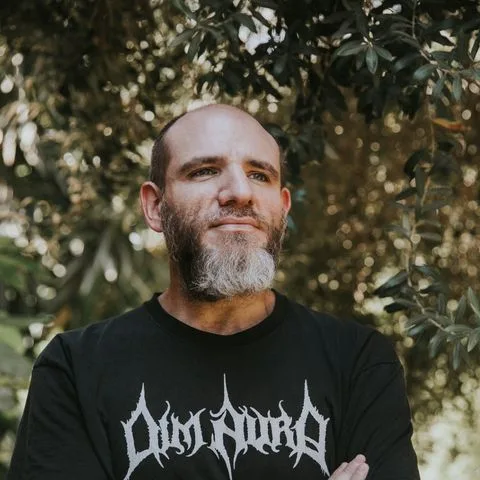
Pasha Kagan
Independent SEO & GEO Consultant
The starting point
Pasha's prompt tracker does more than report data. It gives recommendations, sometimes down to a draft of new content, and tracks whether each change worked.
The problem was how generic those recommendations were. Many came down to "add an FAQ section." They didn't show which questions the page failed to answer, which headings needed rewriting, or whether AI bots could even fetch the content. The tracker could tell him a page wasn't getting cited. It couldn't tell him why.
Easy fixes are fine for a site owner who wants something quick. For Pasha, whose clients pay him to move the numbers, they weren't enough.
Adding BeSeenByAI
What Pasha found in BeSeenByAI was depth. Instead of broad advice for the whole site, it audits a single page and tells him exactly what's holding it back. He mainly used four parts of the platform:
- Seeing if AI bots can read the page properly
- It flags hidden blocks, bot-only errors and content that only loads with JavaScript, in a much deeper and more precise level than other tools. This way, Pasha knows whether the content is reaching AI models at all.
- Finding what the page doesn't answer
- It builds the questions AI models expect a page on that topic to answer, and ranks the ones the page misses.
- Matching the page to the prompts that matter
- It tests the page against the specific prompts it should show up for, and flags various factors that make the answer hard to pull out.
- Handing findings to the people who implement them
- He exports reports and chooses what goes in. At one client of his, they go straight to the content team.
Pasha started with pages the prompt tracker had flagged as underperforming, often pages where he'd already implemented the tracker's recommendations. He ran each one through BeSeenByAI and implemented both sets of changes. The tracker's recommendations stayed in. BeSeenByAI added a layer of feedback the tracker couldn't give him.
On some sites he makes the changes himself. At the travel insurance company, content decisions belong to the content team, so he sends them BeSeenByAI's findings as exports, and they implement them as part of their regular updates. Either way, the prompt tracker stays on, so he can see what each change did.
“
When I run both platforms on the same page, we do much better than relying on the prompt tracker's recommendations alone.
Pasha Kagan
Independent SEO & GEO Consultant
The three-month article
One client had their whole team work on a single technical article for three months, with their data people supplying the numbers. Getting it out the door had been a struggle.
Once it was ready, Pasha's job was to make sure all that work would show up in AI answers. In the past, that meant reading the entire piece and writing up notes. This time he ran it through BeSeenByAI, which checked whether the article covered what AI models would expect it to, and followed the rules for getting cited.
Despite three months of work, the article missed several of the questions AI models expected. The team fixed these content gaps before publishing.
What he sent the client was a report, not a list in Slack or a quick email saying "change this heading." That made a difference.
“
It gives me actual data. Something that is undisputable.
Pasha Kagan
on handing clients BeSeenByAI's reports
The "best" travel insurance
One of Pasha's clients is set on showing up in AI answers. More specifically, they want AI to name them the best of their category. But they didn't want to say "best" on their own site, or compare themselves to competitors. The theory was that if the site said enough good things about the company, AI models would reach that conclusion on their own.
Pasha used BeSeenByAI's Content Coverage report to test that theory. The report showed the page talked about everything the company does well, but never said why it was the best. The models weren't going to fill that gap for them.
His advice to the client was blunt. If you want to be known as the best, call yourself the best, and explain why. Don't sit and wait for AI to decide it for you. Using BeSeenByAI, he could quickly pinpoint the missing section stating why the company was the best in its field.
The results
Pasha is using BeSeenByAI on many websites. For this case study, he picked three pages where the test was clean, all on the same travel insurance company's site.
On these pages, BeSeenByAI's changes were the only thing that changed. On others he made more changes at the same time, so he doesn't give BeSeenByAI all the credit there, although results did come.
All three had been tracked for weeks or months before the changes, and had already gone through the prompt tracker's recommendations. Pasha checks the tracking daily or weekly, so he knows when a page moves and what changed before it did. None of these pages saw a real change until the BeSeenByAI changes went in, between August 5 and September 2. After that, citations went up on all three.
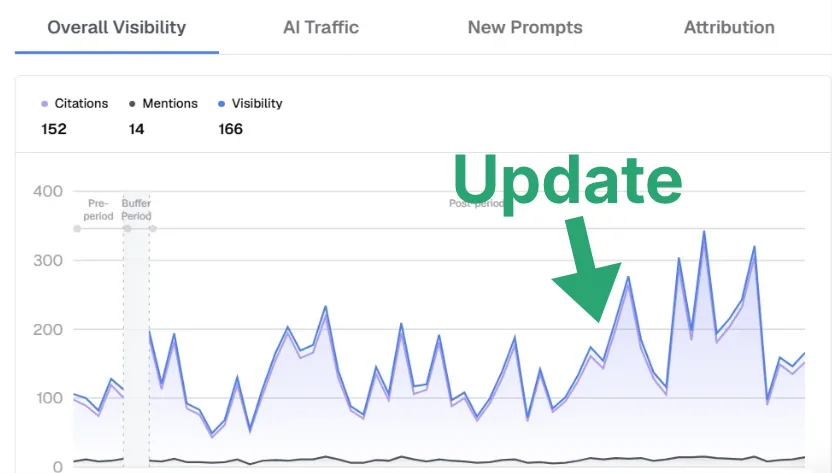
Travel insurance · app page · BeSeenByAI changes: August 5
1. Travel insurance app page
300+peak daily citations
This page had been tracked since January, after the prompt tracker's recommendations went in. For months, visibility hovered around 100 citations a day, with the occasional spike. After Pasha made the BeSeenByAI changes on August 5, it climbed to the highest points on the chart, peaking above 300.
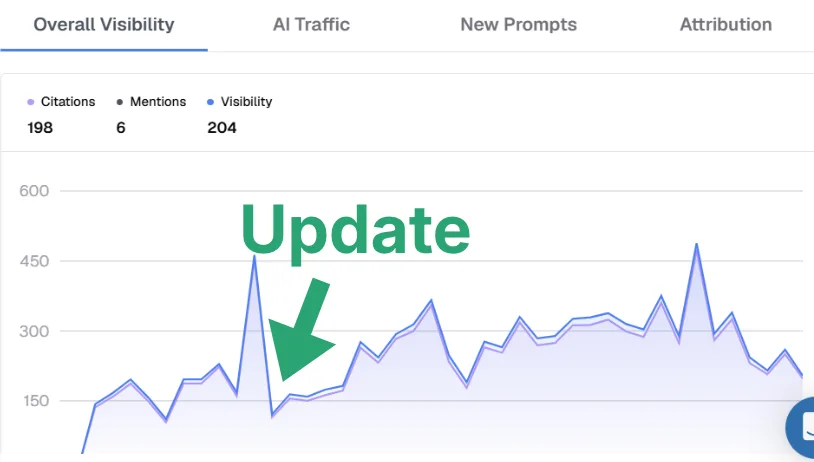
Travel insurance · trip cancellation · BeSeenByAI changes: August 7
2. Trip cancellation explainer
500peak daily citations
This explainer had been tracked since December. Visibility sat mostly between 150 and 300 citations a day. After the BeSeenByAI changes on August 7, it reached its highest point on the chart, close to 500.
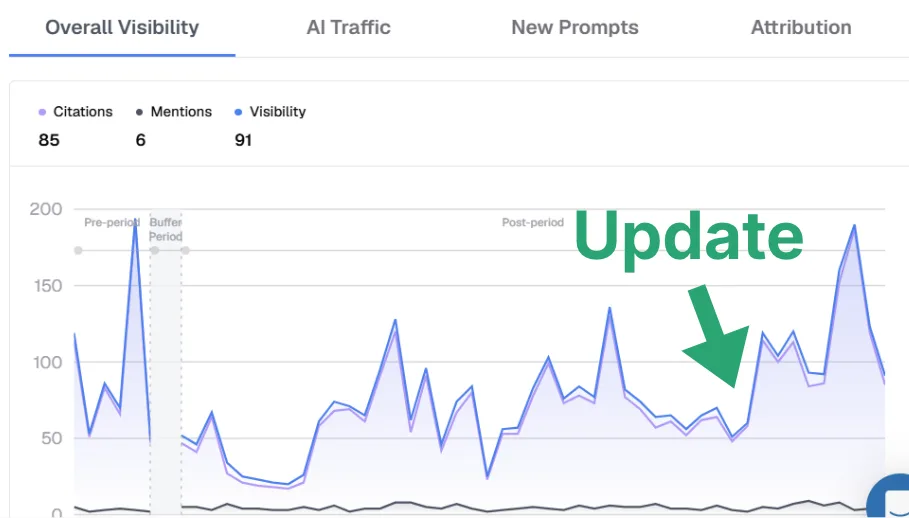
Travel insurance · adventure travel · BeSeenByAI changes: September 2
3. Adventure travel coverage
190peak daily citations
Tracked since November, and for most of that time it barely registered, often under 50 citations a day. After the BeSeenByAI changes on September 2, visibility climbed steadily and peaked near 190, its highest point since tracking began.
Pasha has run BeSeenByAI on many more pages. He picked these three because they're the cleanest tests. On other pages he made more changes at the same time, so he doesn't give BeSeenByAI all the credit there. On these three, BeSeenByAI's changes were the only thing that changed.
What it changed for him
Pasha calls himself a very technical person. Presenting findings in a way that convinces clients is a different skill, and he doesn't always have the time for it. After some client conversations, he walked away thinking that if he'd only had a table, or some proof from their own data, he would have won the argument.
BeSeenByAI gives him that data, already in a form he can put in front of a client. So he now runs every new or updated post through it, not only the pages that stall. The result is more valuable deliverables, and clients who are more involved in the work.
“
My personal charm can only get me this far. I'll need some data from a certain point onwards.
Pasha Kagan
on convincing clients
Try it on your own pages
If you're already running a prompt tracker, BeSeenByAI shows you why the pages it flags aren't getting cited.
Start a free audit